November 21, 2011

http://www.nmha.org/go/codependency

The above article discusses codependency as a learned behavior; what is learned can be unlearned. Many people have heard of codependency as it relates to those who live with individuals addicted to things such as drugs, alcohol, sex, and gambling. However, codependency can occur in any type of relationship, even those relationships which do not involve someone else’s addictions. Codependency, which I choose to speak of as loss of self in someone else, can occur in a variety of relationships including our relationships with our partners, our children, our aging parents, our friends, and our co-workers, and its origins can come from a number of possible sources that include but are not limited to living with addictions, chronic illness, abuse, neglect, perfectionism, and rigidity.

In Disentangle: When You’ve Lost Your Self in Someone Else, the central theme is codependent relationships. It offers practical tips on how to get emotional freedom from such relationships and to rediscover your true sense of self. The process is not easy, but you can do it. I have worked with many individuals over the years who felt trapped by such relationships and yet many have benefited by this recovery process. As you begin this disentangling process, I have found it useful to understand it in terms of these ten Basics:

It’s about the experience of losing your Self

It’s about unhealthy attachments

It’s about finding you

It’s about getting balance

It’s about intervening on your behalf

It’s about spiritual growth

It’s a process without rules or sequence

It’s a process that takes time

Every day ain’t great

Don’t go this alone

In future blogs, I will delve into each of these Basics and cover many other aspects of this disentangling process including specific ideas for change. However, for now, an understanding of the Basics is a good foundation for learning and growth.
November 18, 2011

Last week I had the pleasure of participating in and presenting at the Carolinas Conference on Addiction and Recovery in Morganton, NC. Thanks to Jim Van Hecke and all those who work with him to offer this 13th Annual Conference. Much good work is being done there in the Carolinas in treating addictions.

My presentation was “When You’ve Lost Your Self in Someone Else: Working with the Dynamics of Codependence.” This is a topic familiar and close to my heart. It is also a topic which does not get as much attention at an addictions conference as most other topics. I am always glad for conference organizers who do recognize the importance of treating codependence in order to treat addictions, and I am always glad for the participants who choose to come to my session for they, too, are acknowledging its importance.

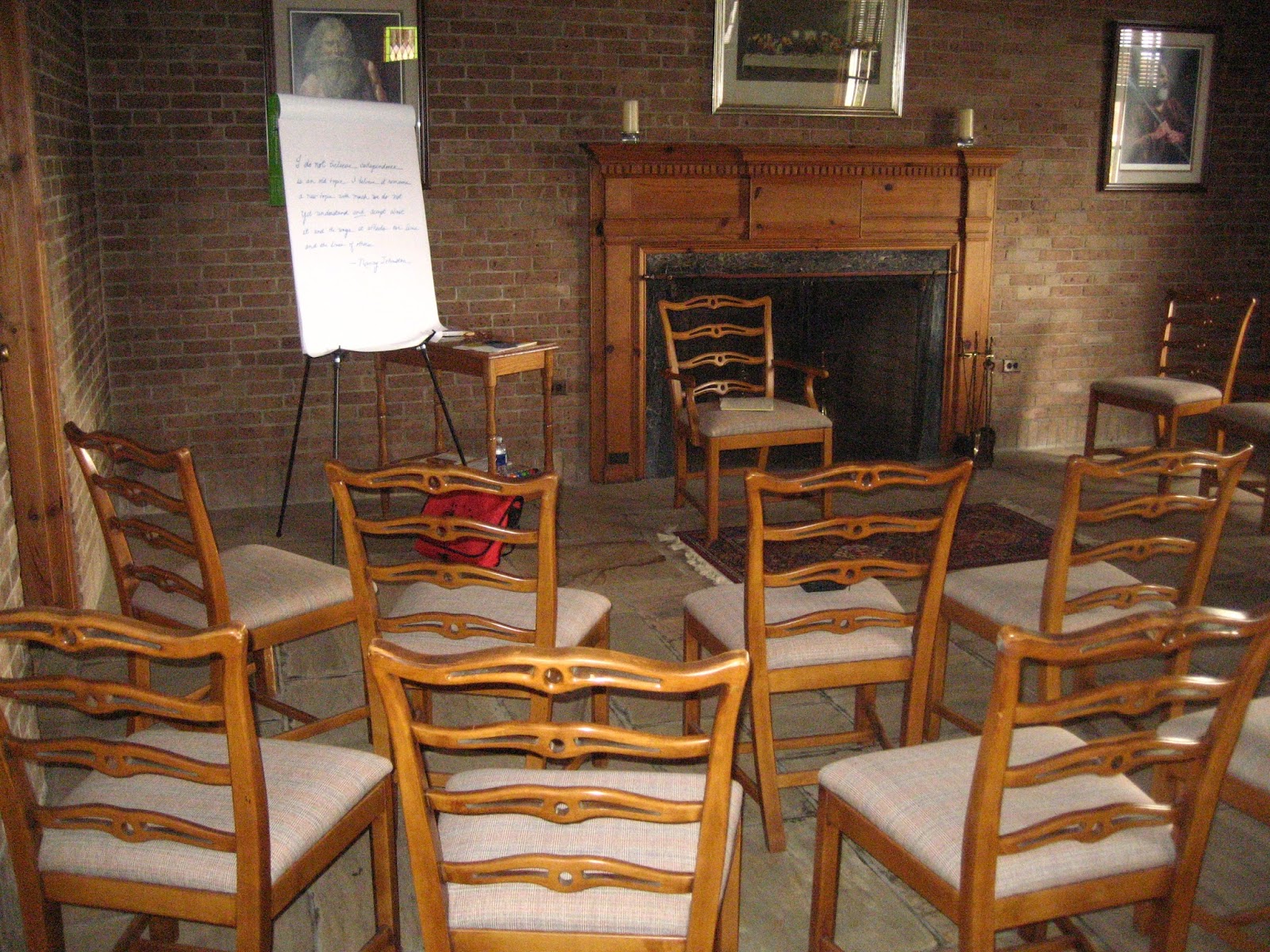
With all of this in mind, as I prepared for my session, I decided to write the following on my flip chart for participants to read as we started:

I do not believe codependence is an old topic. I believe it remains a new topic with much we do not yet understand and accept about it and the ways it affects our lives and the lives of others.

I have reached this statement of belief after having studied this topic both personally and professionally, written Disentangle and done numerous workshops and retreats on the topic, and examined the current professional literature on codependence.

Codependence does remain a step-child topic in our fields of addictions and mental health. But it is, in fact, as very real constellation of behaviors which can profoundly affect our lives. I was recently having a casual conversation with a colleague on this topic who said, “Codependence is every where.”

I am not trying to sell books. I simply see that our loss of self in others depletes us, frustrates us, and can leave us stuck in bad feelings and emotions. I believe it is good to know a way out of this.

More blogs will follow offering further information on this topic and ideas to help us free our self.


September 9, 2011

As you know, I have been blogging about the meanings of codependence as well as its importance as a topic. I usually like to write in linear ways, one writing naturally following from the other. That is not the case as I am finding things I want to say on my blog. Maybe that’s how blogs go anyway – a burst of thought and meaning.

I will be writing more about codependence as a sleeper topic, as I promised, but today I am winding back to my call for efforts by all of us to further understand what we mean by codependence.

Recently I was speaking with someone who is new to the word and meaning of codependence. As we were talking, they said, “Well I am not codependent. I am very independent.”

Aha! A very useful comment.

This person is, in fact, very independent and has been so since a young age. They had to learn to take care of their self and then others as well. They do function well independently. Often this is the case with codependents, we are the ones earning the money, paying the bills, keeping the calendars, maintaining our home. So what’s so wrong about that?

To respond to the person’s comment about being independent and not codependent, I explained to them, and to me once again, that the dependence in codependence is about us acting in ways that make the other person dependent on us. We are not necessarily even aware of our doing this as we offer and give, but as we continue to do such things, our own independence and strengths enabling us to do this, the other person becomes less and less empowered and more and more dependent on us and perhaps on addictions of their own.

And if we are not additionally mindful, we can become dependent on their being dependent on us: a heap of dependence with any hint of independence eventually being lost.
Last week in my blog I referred to codependence as a sleeper topic. I have said this before and realize I want to say a bit more about what I mean by this.

I call codependence a sleeper topic, because it does not receive the time and attention that many other topics related to addictions receive. When I look through the brochures and booklets listing sessions offered for addiction and mental health conferences, there are not many sessions on codependence, if any at all. There may be a few sessions offering information for helping families living with addictions, but the deeper issue of loss of self in someone else is seldom addressed.

I have even had someone say to me in reference to conference planning, “Oh, we did codependence last year.”

Would we say that about offering sessions on helping the substance addict to recover or on strategies for relapse prevention? - “Oh, we did that last year.”

I know that codependence remains unclearly defined and can be over-used. I also know some academic work is being done to develop assessment tools to better define codependence and thus be able to study it better.

In the meanwhile, loss of self in someone else remains an important clinical dynamic which I believe needs consistent, valued attention from each of us in these fields of mental health and addictions.

We can encourage people to “do something for your self” or “just tell them ‘no’”,  but the individual being coached to do this probably needs some deeper work within their self in order to be able to make this profound change.

Yes, this is a profound change, to be able to consider and assert self in the face of someone else’s addiction, dysfunction, or neediness.

Untreated codependence can lead to many things, including anxiety, depression, and relapse. I will write about each of these topics in my next blogs.

In the meanwhile, I will continue to help wake us up on this topic. There are some strong voices in our fields that have gone before me and sounded the alarm to wake us up to codependency. I applaud them and join them.
Barnes & Noble on the Duke of Gloucester Street, Williamsburg, VA

, 2011
I know I am not blogging very often. And I know that when I do blog, I am often writing about the importance of understanding and offering help for codependent behaviors.

I am not doing this to sell books. I am doing this because as I am out in the world talking to people and as I am at home functioning as a wife and mother, I keep seeing many of us struggle with questions about how much to help others and when to stop helping; when to step back from my involvement in someone else’s space/life and into my own world/life; when to move away from my preoccupations with others and back into attending to things I need to do for my self.

Since I last blogged, I have had two wonderful opportunities to do book signings: one at the William & Mary Bookstore/Barnes & Noble in Williamsburg, VA on the Duke of Gloucester Street and the other in Washington, DC at the American Psychological Associations annual convention. Both were powerful times with many conversations about tangles and disentangling with people talking about:

raising their children.
adult children returning home.
helping friends.
sibling problems.
workplace conflicts.
leaving job.
living with addictions.
their own recovery.
their own over-functioning.

Both the general public and professionals in our fields of mental health and addictions have been eager to talk with me, often not necessarily about Disentangle, itself, but about their own situations and stories.

These are very important questions for us each to be willing to bring into our awareness and then see what we want to do about our self and our role in entanglements. I still maintain that codependence is a sleeper topic in our fields and that ironically, it is quite a fundamental problem that feeds the more predominant problems such as anxiety, depression, and addictions.

So keep your questions and stories coming. The more we look at codependent behaviors and what we can do about them, the closer we can get to good mental health.

Thanks to those of you who have been talking with me about your experiences with the word and concept of codependence. As you know, I am writing another book on this topic and invited such talks through my last blog.

I have heard from people in person, by email, and by blog comment. So far, the responses tell me that the word and meaning of codependence are useful to you and that you don’t mind the word, are not “ashamed” of it. Several responses tell me that understanding the meaning of codependence helped individuals to make sense out of their behaviors and life in a way that they had never been able to do before.

So I want to keep on talking about this.

Today I am narrowing our focus to the question of what you think codependence means. I would like to hear from you whether you are a person recovering from codependence or a person who has heard the word and has only a general idea of what it is supposed to mean or a person who has stayed away from anything that has to do with codependence.

Last blog I mentioned that I think of it as loss of self in someone else. Others responding to my blog stated that their codependence came from never having had a self at all. I believe both of these can be the case.

What do you think codependence means?
I am writing on a second book, as you likely know. It, too, is about codependence with new views and thoughts about it gleaned from the past 20 years of my personal and professional work. I have had the book in mind for a number of years, and it is quite wonderful to be so fully into this project now.

As part of that this work, I have been looking at both self-help resources as well as academic writings on this topic. Most are supportive and knowledgeable about codependence and the importance of our understanding it better and knowing how to help those who want help with it.

And as I am doing this work, I realized that I would like to invite you to send me your comments through this blog about your understanding of, feelings about, experiences with codependence. I like to think of codependence as loss of self in someone else. Please let me know how you think of it, how you experience it.

My preferred mode is conversation not lecture or monologue. Sometimes I have trouble with blogging, because it is not as conversational as I like. I am a therapist. I work through conversations. When I teach in workshops, I talk and then encourage discussion and sharing. I believe this is a great way to move into greater understanding and growth.

I hope to hear from you.