April 27, 2012

Please know that these blogs are but brief looks at material that is covered in numerous books and articles. My intent here is to just keep pointing us all in directions that will increase our self-understanding and potential for healthy changes in our lives. I will be sharing the names of resources as we go along for you to explore further just as I am doing.


I have known of the work of Alice Miller, particularly her book The Drama of the Gifted Child, for the past 20 years, and yet not until this past year did I stop and intentionally study her work. I knew that therapists working with the inner child model quoted her and had built some of their work from hers. As I continued to write about codependency, I knew it was important for me to keep reading and learning. Alice Miller is one of the resources I studied, and I was thrilled to learn what she says and how it applies to codependency.

Alice Miller never uses the word “codependent,” but the “gifted child”‑ the child who is sensitive, intelligent, alert, and attentive - shares many characteristics with the codependent. But first a bit more background:

Alice Miller was a psychoanalyst who developed her material from both her professional and personal understandings. The Drama of the Gifted Child was first published in German in 1979 under the title Prisoners of Childhood. It was published in English in 1981 as The Drama of the Gifted Child: The Search for the True Self. This subtitle is so powerful and telling as far as I am concerned. Many of us now know that recovery from codependency is in fact the finding and developing of our True Self.

Miller maintains that in very early childhood some parts of our true self were split-off from us as a result of the way we were treated by our primary caretaker. Our feelings and needs were not attuned to and responded to by that caretaker. We were not mirrored and echoed by them. Instead, we learned to attune to the feelings and needs of our primary caretaker and to try to respond to what we believed they needed and wanted from us. Those needs of the primary caretaker for our mirroring of them were at an unconscious level within them and likely to have come from the parenting they received.

As a result of these experiences, we developed a strong capacity to attune to the feelings and needs of others and to respond to those feelings and needs as best we can. In doing this, we disconnected from our own feelings and needs. I see this as the very early seeds of focusing on the external and not our internal. And because we were not mirrored by our primary caretaker, we are unable to see and know our self. We thus developed a false sense of self vs. a true sense of who we are and how to respond to both our self and others in healthy ways.

Ways to help our selves with this false self vs. true self will follow in later blogs.
April 20, 2012

You have read my blogs and tweets from Codependence Camp. After our last Camp earlier in April, I decided to blog about some of the things we are learning at Camp, but first, a bit about Camp.


Codependence Camp occurs in a bed-and-breakfast setting in southwest Virginia. It is the home of my close colleague and friend, Margaret. Camp occurs twice a year, and we have had 14 Camps. We meet for 2 days and 1 night and use at least 9 hours of our time to study and learn about ourselves and codependency. We also have time for walks, expressive arts, mindfulness practices, rest, great meals, laughter, and a campfire, of course.

In our previous Camps we have studied everything from understandings of codependency to extensive skills to help us with healthy self-growth. Each Camp helps us to see where we are in our growth and what would be good to work on in future Camps. After our Camp last October, it was clear that we were ready and wanting to look further at the deeper roots of our codependency so as to increase our self-understanding and learn more ways to make these changes we desire for our self.

My plan in this blog series is to share with you some of the sources we studied including the work of Alice Miller, attachment theory, and family systems theory as well as the rules and roles that encourage our codependency. With this information in mind, I will then blog on what we are trying to accomplish in our recovery from codependency as well as specific things we can do to meet those recovery goals.
December 19, 2011

It is normal to want things and to get attached to that which is important to us. People, places, and things share our existence and enrich the quality of our life, or at least they should enrich our lives. Disentangling is not about ending the good attachments we have in life. It is about shedding unhealthy and dysfunctional attachments that detract or take away from the quality of our life.


The Diagnostic and Statistical Manual of Mental Disorders - IV (DSM-IV) indicates that a disorder exists if whatever condition present causes significant distress or problems in one or more important areas of one’s life. These important areas of life include health, relationships, work, etc. A few examples of such problems that can come from unhealthy attachments include:
  
Loss . . . of job, of temper, of friends, of family, or anything else we deem important.

Neglect. . . of spouse, of children, of ourselves, of our health, of our work, financial, or school-related responsibilities.

Failure. . .to prepare for the responsibilities of life or to show up for life, for example by isolating or staying in bed all day or all week not due to a physical illness. 

The result of these losses, negligence, or failures on our part is that they take up space in our mind, and our mental preoccupation with them drains us of our life’s energy. The preoccupation of our mind will cause us to engage in unhealthy behaviors. Pursuing, watching, sneaking, and above all waiting, drains us causing us to neglect other more important areas of our lives. Our focus narrows, and we concern ourselves only with the needs of the other person. As this preoccupation with the other person grows, our Self will wither and die deep down inside. When given the choice of meeting our own needs or that of another, we will choose to neglect ours in favor of those of the other person. As the unhealthy attachment continues to grow, we sink deeper into the hole we have dug for ourselves.

Unhealthy attachments rob us of our peace of mind. This concept is not new. The Buddha (563-483 BCE) discusses attachment in his Four Noble Truths. Essentially he said that suffering arises from attachment and it ceases when attachment to desire ceases. The damaging effects of attachment are documented throughout human history. How many conflicts are fought because a leader becomes fixated on taking, gaining, or having something…anything? How much mayhem is caused by someone whose romantic aspirations became larger than life and yet they chase the affections of another to the brink of insanity? Things can easily get out of hand without the ability to objectively view what is happening. It can happen…you can get hooked…on anyone or anything. The key is to recognize the attachment so you can begin to reverse the process.  

It is no surprise that attachment to another person can be so damaging to our health and welfare. Yet it can happen, and we may be unable to comprehend what is happening or when it is happening. We definitely feel its effects, whether physical or emotional, yet we still think we can handle it if we just try a little harder.

For now just think about the relationships you currently enjoy and ask yourself if any of them have become unhealthy or are draining you. Have any you used to enjoy become just too difficult and yet you can’t figure out what changed? Whatever you do, acknowledge it, but don’t dwell on it.

If there is an unhealthy attachment to another person in your life, there is still hope. You can disentangle, but in order to do that you must find YOU! And in my next blog I will discuss how to go about finding YOU.
December 6, 2011

In my last blog I introduced The Basics of disentangling. In today’s blog, I will discuss the first Basic: It’s about the experience of losing your Self.

Notice in this first Basic the word “Self” is capitalized. This is the first important concept for you to understand. Your Self is the real you, the spiritual you, deep down inside. Your Self is what is lost when you become entangled in relationships with others. This entanglement may not have been apparent when the relationship(s) began; it developed over time. As more and more of the “true you” went underground, you became emotionally drained and spiritually disconnected. Reversing this process so as to retrieve, connect with, and develop the true you is why I wrote Disentangle.

Losing your Self in someone else can happen quite easily. Enmeshing or entangling emotionally with someone else chips away at your sense of self and your individuality. This often happens in dysfunctional relationships that are familial, romantic, or can be professional. Living vicariously through someone else, and being emotionally consumed with another person can turn your life upside down. Worry, anger, confusion, anticipation, hopes and dreams—always centered on another person—is unhealthy.

Entangling is common among codependents and/or Adult Children of Alcoholics (ACOAs). Many professionals in the counseling and addiction fields have differing definitions of codependence. However, regardless of the definition you choose, one similarity remains. That single similarity is the continued investment of one’s sense of self in the other person. This investment is damaging because when one links his or her sense of self to their ability to meet another’s needs—and those needs are dysfunctional and unstable—the result is suffering. Suffering comes in emotional and physical forms. The desire to change the other person, the desire to control them, or fix them is the root of much of the insanity. You cannot make them well or make things better by loving them more.

The other person with whom you are entangled may well be ill. That illness is often addiction-related but need not be. Controlling or care-taking behaviors may or may not be present. However, the insanity experienced when you are entangled keeps you hyper-vigilant or on a heightened state of alert. You can’t really take a break from the worry and stress if you are always attuned to the needs of another. Losing your Self causes emotional difficulties and can make you physically ill.

Stress and worry can manifest in many physical forms, including chest pains, difficulty breathing, upset stomach, body tension, and problems with sleeping and eating. If you have reached the point where you have physical problems associated with entangling you may need more help than this book can offer. There are many excellent options available to address the physical symptoms of the stress and worry.


However, if you are entangled you must also address the underlying loss of Self through the process of disentangling. Admitting that you have a problem—recognizing you have lost your Self—is the first step in getting well. I have helped many individuals along this path, and every journey and every story is unique. However, they all share a few common threads and they are a loss of Self, a desire to find it, and a desire to take the necessary steps to begin the process of change. Change is not always easy but it is vital if you find that you have lost your Self in someone else. Begin your journey today and look for future blogs addressing nine more of The Basics which explain the underlying processes of disentangling.

 
November 21, 2011

http://www.nmha.org/go/codependency

The above article discusses codependency as a learned behavior; what is learned can be unlearned. Many people have heard of codependency as it relates to those who live with individuals addicted to things such as drugs, alcohol, sex, and gambling. However, codependency can occur in any type of relationship, even those relationships which do not involve someone else’s addictions. Codependency, which I choose to speak of as loss of self in someone else, can occur in a variety of relationships including our relationships with our partners, our children, our aging parents, our friends, and our co-workers, and its origins can come from a number of possible sources that include but are not limited to living with addictions, chronic illness, abuse, neglect, perfectionism, and rigidity.

In Disentangle: When You’ve Lost Your Self in Someone Else, the central theme is codependent relationships. It offers practical tips on how to get emotional freedom from such relationships and to rediscover your true sense of self. The process is not easy, but you can do it. I have worked with many individuals over the years who felt trapped by such relationships and yet many have benefited by this recovery process. As you begin this disentangling process, I have found it useful to understand it in terms of these ten Basics:

It’s about the experience of losing your Self

It’s about unhealthy attachments

It’s about finding you

It’s about getting balance

It’s about intervening on your behalf

It’s about spiritual growth

It’s a process without rules or sequence

It’s a process that takes time

Every day ain’t great

Don’t go this alone

In future blogs, I will delve into each of these Basics and cover many other aspects of this disentangling process including specific ideas for change. However, for now, an understanding of the Basics is a good foundation for learning and growth.
November 18, 2011

Last week I had the pleasure of participating in and presenting at the Carolinas Conference on Addiction and Recovery in Morganton, NC. Thanks to Jim Van Hecke and all those who work with him to offer this 13th Annual Conference. Much good work is being done there in the Carolinas in treating addictions.

My presentation was “When You’ve Lost Your Self in Someone Else: Working with the Dynamics of Codependence.” This is a topic familiar and close to my heart. It is also a topic which does not get as much attention at an addictions conference as most other topics. I am always glad for conference organizers who do recognize the importance of treating codependence in order to treat addictions, and I am always glad for the participants who choose to come to my session for they, too, are acknowledging its importance.

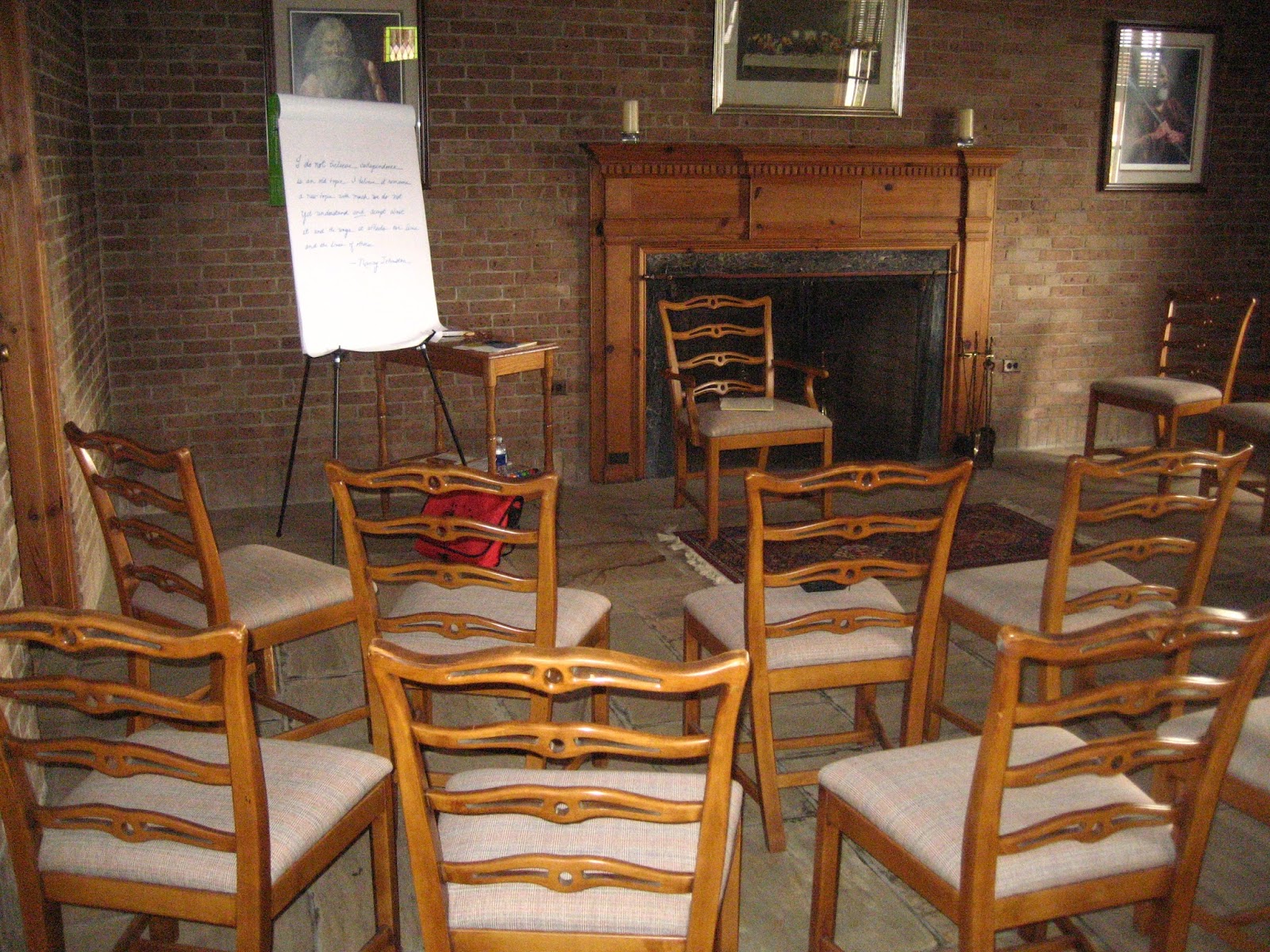
With all of this in mind, as I prepared for my session, I decided to write the following on my flip chart for participants to read as we started:

I do not believe codependence is an old topic. I believe it remains a new topic with much we do not yet understand and accept about it and the ways it affects our lives and the lives of others.

I have reached this statement of belief after having studied this topic both personally and professionally, written Disentangle and done numerous workshops and retreats on the topic, and examined the current professional literature on codependence.

Codependence does remain a step-child topic in our fields of addictions and mental health. But it is, in fact, as very real constellation of behaviors which can profoundly affect our lives. I was recently having a casual conversation with a colleague on this topic who said, “Codependence is every where.”

I am not trying to sell books. I simply see that our loss of self in others depletes us, frustrates us, and can leave us stuck in bad feelings and emotions. I believe it is good to know a way out of this.

More blogs will follow offering further information on this topic and ideas to help us free our self.


September 9, 2011

As you know, I have been blogging about the meanings of codependence as well as its importance as a topic. I usually like to write in linear ways, one writing naturally following from the other. That is not the case as I am finding things I want to say on my blog. Maybe that’s how blogs go anyway – a burst of thought and meaning.

I will be writing more about codependence as a sleeper topic, as I promised, but today I am winding back to my call for efforts by all of us to further understand what we mean by codependence.

Recently I was speaking with someone who is new to the word and meaning of codependence. As we were talking, they said, “Well I am not codependent. I am very independent.”

Aha! A very useful comment.

This person is, in fact, very independent and has been so since a young age. They had to learn to take care of their self and then others as well. They do function well independently. Often this is the case with codependents, we are the ones earning the money, paying the bills, keeping the calendars, maintaining our home. So what’s so wrong about that?

To respond to the person’s comment about being independent and not codependent, I explained to them, and to me once again, that the dependence in codependence is about us acting in ways that make the other person dependent on us. We are not necessarily even aware of our doing this as we offer and give, but as we continue to do such things, our own independence and strengths enabling us to do this, the other person becomes less and less empowered and more and more dependent on us and perhaps on addictions of their own.

And if we are not additionally mindful, we can become dependent on their being dependent on us: a heap of dependence with any hint of independence eventually being lost.