This event is limited to 12 guests who are interested in engaging in conversations with me about "Caring About You Without Losing Me" - my most recent language for my work. The material we will be talking about offers guidance for partners, parents, caregivers, and friends. That about covers us all!


Complete event information can be found in these beautiful flyers created by Downtown Books in Lexington, VA.


I hope you may be able to join me at Downtown Books, Lexington, VA on Wednesday, February 8th, 7-8:30pm. Please let Paige Williams, the store owner, know you will be coming. We'll save a seat for you.


What might happen if we listened better to each other? Just listened and let the person who is speaking know we hear them?


Though you will not get the benefit of my in-person flip chart trainings, you can get training I am offering online through PESI - a professional educational service that awards CEs.


Here is the link to my current trainings PESI offers: https://catalog.pesi.com/speaker/nancy-johnston-952193 


Especially note that I am offering a 6.25 live online webinar on Wednesday, December 7, 2022:

The Codependency Treatment Guide:

CBT, Somatic Strategies and More

to Disentangle Clients from Dysfunctional Relationships and Recover Self

The Codependency Treatment Guide


In case you are Curious,

In case you are Thinking of Joining Us,

In case you Plan to Join Us,


Here are the dates for Codependence Camp for 2023:


Spring 2023 - Camp#31 - Friday, March 31 - Sunday, April 2, 2023


Fall 2023 - Camp#32 - Friday, September 29 - Sunday, October 1, 2023


Codependence Camp is held at 

Vine Cottage on the grounds of The Inn at Forest Oaks

Natural Bridge, VA 24578

https://theinnatforestoaks.com/


 If you would like to be on the blind copy email list for Camp agendas and registration,

please contact Nancy L. Johnston through this website.


The day has come! Earlier in the Spring I did an interview for The Love Fix Podcast with Sherry Gaba and Carla Romo. The interview was released today! What a great time we had talking together! Sherry and Carla really know their stuff and are super interested in codependency.


Here are the links to our show. There are plenty of wonderful shows on The Love Fix Podcast for you to enjoy and learn from, too.


iTunes:

https://podcasts.apple.com/us/podcast/self-recovery-and-codependent-behaviors-with/id1551411428?i=1000567583238


Spotify:

https://open.spotify.com/episode/6vzMuUXENHhVr0hFLmrw1g?si=PdXacaf8Sh-mh5PubJaVVQ


I hope you will take a listen and join us in our exploration of codependency recovery!


Recently I was speaking with someone about the importance of reminding our self of why we set a boundary, why we took a stand, why we made a particular decision - especially when we have carefully centered and thoughtfully made those decisions.


We loose track of the good work we are doing on our own behalf as our focus is drawn outside of our self. Remembering, reminding our self can anchor us when we are feeling pulled off our own moorings.

And then I thought about the word: re-mind and added the hyphenation to emphasize the work we are doing. We are re-minding our self. We are intentionally catching our thoughts which may be forgetting our own needs and feelings. We are re-setting self by re-minding self. We are anchoring back in self.

What helps you to re-mind your self?


May Roses

In case you have found your way to this Blog, please know that the "Self-Recovery" workshop I am offering on Saturday, May 21, 2022, 9am - 12:30pm is happening! Here are the details: https://www.nancyljohnston.com/copy-of-self-recovery-workshop-2.


If you are interested in participating, you are still welcome to contact me through this website as late as Friday, May 20, 2022 to attend this online event on Saturday.


Ready participants are already enrolled. You are invited to join us and spend a Saturday morning learning ways to connect with and foster your self. A refreshing opportunity.


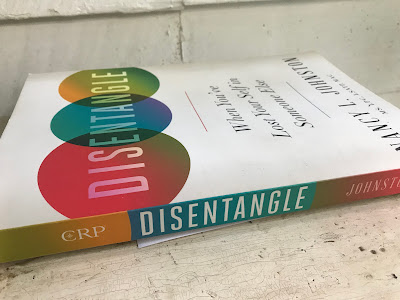
Downtown Books in Lexington, VA - my home base - hosted me for a book talk on the 2nd Edition of Disentangle. In part we offered this event to promote this new 2020 edition. To a larger extent we offered the event in recognition of May as Mental Health Awareness month.


Loss of self in others can be a fundamental reason for the anxiety and depression we treat in our counseling practices. And certainly relationship problems emerge from this loss of self. Often such loss of self presents as over-functioning for others and under-functioning for self. The balance between self and other is off, and we may not even be consciously aware of it.


Since you were not able to attend this talk, I am posting part of the handout I offered that describes paths to internal connections which can improve this self-other balance. The 4 Areas of Work that are the core content of Disentangle are named and illustrated below. These areas of work offer numerous insights and strategies for Self-Recovery:


4 Areas of Work to Foster Internal Connections

With a Take-Away Suggestion for Each Area


Facing Illusions – Reading: pp. 75-76

    Be Realistic with Self

        – Reading: pp. 78, 80

Detaching – Reading: pp. 134-135

    Increase Calm Responsiveness

        – Reading: pp. 136-137

Setting Health Boundaries – Reading: pp. 154; 155-156

    Find your “I” statement

        – Reading: pp. 167-168

Developing Spirituality – Reading: pp. 195-196

    Be aware of what You Can and Cannot Control

        – Reading: pp. 217-218; 219


We had a wonderful and meaningful time at Codependence Camp the weekend of April 1 - 3, 2022 at Vine Cottage on the grounds of the Inn at Forest Oaks in Natural Bridge, VA. This was our 29th Camp, and the learnings, comfort, and flow of Camp offered healing and growth.

Our focus was on "Self-Attunement" - developing our abilities to tune into self, to cultivate self as a reliable, safe haven. Our time in workshops was spent understanding this important aspect of recovery and then working in various ways to develop our internal resources to support Self-Attunement.

We plan to continue this internal resource development at our Fall Camp scheduled at Vine Cottage from Friday, September 23, 2022 - Sunday, September 25, 2022. Consider joining us. 

You can come enjoy the screened porch:


Workshop in the living room:


Delight in delicious meals:


Stroll the grounds:


Learn from Nancy's Flip Chart:


Work on your Self-Recovery:


You are invited.


Thanks for finding my website. And thanks for digging even deeper to find this blog.


It's time to say a bit about where my work with codependence and Disentangle has gone over this past year - a brief and solid look.


In August, 2020 the 2nd Edition of Disentangle: When You've Lost Your Self in Someone Else was released pandemic style with radio interviews and online articles. Just prior to that release, I was fortunate to record a digital seminar for PESI: Codependence: Treatment Strategies for Clients Who Lose Themselves in Others.


These opportunities, along with participation in a number of virtual trainings, invited me to think even more comprehensively about the treatment of codependence. Clear and fundamental ways to describe codependence and its treatment emerged.


Simply put, I believe codependence can be defined as loss of self in someone else. This loss of self can lead to over-functioning for others/under-functioning for self. This intra/inter-personal style comes from a predominant tendency to focus externally. No blame or judgement. There are a number of reasons for our external focus. It has been adaptive and even protective for us. And we may find that we lost our self along the way as our internal focus dimmed and dimmed.


Then one day a client was telling me a story about losing her temper and saying regrettable things to the other person. She was feeling bad about what she said and her failed attempts to express her self in a way to be heard. In responding to her, I reflectively suggested, "You were not able to recover your self in that moment." We both liked that way of putting it. And I knew then that the integrated model of codependence recovery I was distilling is Self-Recovery.


This diagram/logo of the Self-Recovery Model incorporates the 4 integrated elements I now highlight as the heart of healing codependence:

The 4 Elements of Self-Recovery
Self-Understanding
Self-Awareness
Self-Competence
Self-Attunement


This Self-Recovery Model involves cultivating our internal focus with compassion, mindful presence, confidence, and care as we engage in specific work in each of these 4 areas of Self.


I will be offering a 4-hour workshop on Saturday, February 19, 2022, 10am-3pm(EST) on Self-Recovery. If you are curious about it, check out the description of that workshop under the Events Tab on this website.


More on Self-Recovery as these blogs emerge.


Well Wishes!
Nancy


I was writing an email to a friend today and found myself saying about our family, “We are all well and choose to not travel to support The Great Effort.” I like this phrase - The Great Effort. Yes, that’s what we are being asked to do and what will save us: The Great Effort.


Each word in this phrase is important. Whether we are working on our health, a home project, parenting, our primary relationship(s), or a community need, it usually takes “a great effort” to reach our goals.


“Effort” is not necessarily a state we run toward. When I explain to people that the changes they want to make for themselves will involve work, many are sorry to hear that. We want to believe that once we have learned something new, we can naturally put it to action with no looking back. Those of us in recovery from addictions know well that is not so. We know that “effort” means we will show up daily with our intentions, new skills, new knowledge, and practice the changes we are making. It is work to remember to do all of these things, and it is work to practice them when we easily can slip into our usual ways. Effort is needed.


“Great” speaks to both the extent to which I, as an individual, need to expend my energies toward the goal and to the extent to which collective movement toward the goal is imperative.  When an individual is in recovery from an addiction, consistent and clear support from family and friends as well as changes in their behaviors make a world of difference in fostering recovery for all. “Great” means that when I don’t want to do something that will make a positive difference for the larger world, I go ahead and do it. “Great” means that we are all in this together and what I choose has an effect that ripples out and out and out.


“The” highlights the importance of this Great Effort. It is “The Great Effort” needed to stop the spread of this pandemic and to give us safe spaces to restore ourselves, our communities, and our world. This is possible and quite likely with great effort on the part of each of us together.


Just days before the killing frost that took my COVID garden, I gathered this box of flowers, herbs, and vegetables to give to a friend.  Each of these varieties grew through the great, collective effort of the sun, soil, and water. They grew through my faithfulness in their care, through advice I was given from others about growing them, and through their natural ability to share their garden beds with each other so they all grew well and strong – and quite beautifully!


The ideas I have been suggesting for Living Closely Indefinitely are challenging. Celebrate Together, Honor Separate, and Expect Less - topics covered in my last three blogs – invite us to operate in ways that may not be our first-choice ways of being. Maybe we generally like to have our own space and are not happy about always being around others in our family. Maybe we have trouble leaving others in our household alone when they disappear into their rooms or go off on a walk and don’t invite us along. And certainly suggesting we lower the bar for what we can hope for or expect from our self and others is not the direction we often go.


Learning to Respect Different can be equally challenging both in understanding what this means and in living in this way.


Respect Different is acknowledging that we each have different thoughts, beliefs, emotional responses, choices we make, and actions we take. We are different people with different natures and nurtures interplaying within our self.

First we do well to be anchored in our self, to know what we are thinking and feeling and why we are choosing what we choose. This self-discerning process can be rich and calming. It helps us to be aware and intentional and to act in ways that are consistent with who we are.


Then, as we encounter Different in the next person we see, we want to listen to them and understand them. We do not have to agree with them. We are only seeking to hear them and for them to feel heard by us. Rather than interrupting and jumping in with our ideas and beliefs, we listen and make sure we have heard them accurately. We may find that we want to respond with some of our own thoughts and ideas, even our concerns for safety and justice. We can do this after we have heard and understand what they are saying.


The caution for us as we speak up is in knowing when to stop, to not go further, to agree to disagree perhaps. Our mental health is helped by not getting too entangled with trying to convince or change someone else.


I can only control my self, and I am grateful to know this reality.  I can speak my truth, explain my truth, and then the best thing I can do is go live out that truth in ways that are consistent with my beliefs. I may have to set boundaries as a result of these differences. That’s okay and important to do. Those boundaries further clarify where I stand, and they show respect for both my self and the other person by not having endless, unproductive, and self-eroding arguments over our differences.


Know what is true for me, live what is true for me, and respect the differences in others. That’s what these peppers from my Covid Garden did.  I took this picture long before frost, anticipating this blog. My little basket overflows with green peppers, red peppers, sweet peppers – large and small. Each pepper grew according to the interplay of its nature and nurture. They are all peppers, but each is different.


We are all together in an overflowing basket, too, so to speak. Our mental health and our relationships with each other can be helped by the lessons from this beautiful assortment of peppers who grew together in my garden.


Frost ultimately came to my Covid Garden here in the Valley of Virginia. It was a sad day for me when I had to say “good-bye” to my lovely, fruitful companion. I had been watching the forecasted temperatures and was ready to cover the remains of my flowers and vegetables on a Sunday to protect them, but the frost moved in one night earlier than my plans and took the still colorful blooms and green tomatoes.


Life moves on. And so have I, but I have two more lessons to share from my Covid Garden. The photos in this remaining blog series were taken during the growing season. I knew then what I wanted to write about and how the produce from my small kitchen garden could help me share my thoughts.


This blog on Expect Less as a coping strategy during this pandemic poses some challenges for me. When I suggest that we expect less of self and others, this is not a usual thing we do. In fact, we are often focused on doing more, having high standards, and even perfection. For me to suggest that we Expect Less could sound weak and giving in to the pressures around us. It is not.


Expecting less is more about being realistic in what we can do and kind to our self and others as we accept what is realistically possible. Teachers at all levels of education have been particularly challenged by the demands on them to perform and simultaneously attend to their own needs to adjust their expectations to less despite what is asked of them. Working parents with children attending school from home are simply unable to do all that they have done in the past. Both the parents and the children do well to determine what is possible to accomplish in a day or week and focus on those reasonable, adjusted goals.


And now with the holidays upon us, Expect Less can be a useful reminder. Less gatherings, less food, less gifts; more time with our immediate family, more enjoying the taste of the food we have, more appreciation for what is already in our possession.


No one will be permanently harmed by less right now; in fact, we are helped by being realistic and accepting what is possible. Our minds can be clearer, our moods less agitated, our body less tense, and our spirit more accessible to us.


In the photo above is a yellow squash from my garden. It is one of the only two yellow squash my hill of four plants produced this year. I was excited about these four plants as they were heirloom plants. This particular variety is native to America. I was enchanted with that information and looked forward to a bumper crop of native squash. That was not to happen. I don’t know why, and my experienced gardening friends don’t either. What I do know is that I had to accept less. I had to accept the two squash given to me and not rail against what these plants simply could not produce this year. The squash was delicious. I appreciate the two I was given.


There will be another year. There will be another growing season.


We are lucky here in this part of the Shenandoah Valley - frost has not yet hit us. It has been around us, but not yet here at our home on the James River. I am glad, because the tomatoes and peppers keep producing along with the basil and the beautiful zinnias. In fact, it appears that the zinnias like these cooler temperatures. They are still growing and blooming, offering their beautiful colors and smiling faces.


We continue to live closely here at our country home. Our ages have my husband and I being particularly careful to not expose ourselves to the Covid virus. I know that I have been enjoying this time together as I wrote about in my previous blog. And we each are also honoring when we want to be away from each other. Our separateness usually is in the form of being in different places in the house or on the property.


Honoring the need for the other person to have time for themselves is very important to good mental health and balanced relationships, thus this second living-together suggestion: Honor Separate.


I teach relationship dynamics through the use of circles. In this case of two individuals, each person is a circle. In a healthy relationship, the two circles have a dynamic relationship where the circles can intersect each other as much as is agreeable to each individual. They can completely overlap. And when one person wants to separate and have time for self, that person is able to slide their circle away from the other person’s circle without an issue. Mutual respect for both the relationship and the individuality of each person makes this possible. Trust does, too.


So when my husband goes to work on his writing or is busy with notes he may be jotting down for his work, I respect his space. I try not to interrupt, not to insert myself in what he has going on. He has not left me. He is just doing things which are part of who he is and what builds him as a person. I leave him to his thoughts and work and trust that we will intersect again and again in natural ways as the day moves on.


Honor Separate works both ways. Not only do we want to be in a relationship which honors each person’s needs for time alone, we want to be able to offer this same opportunity to our self to take time away from others and activities. I know that when I step aside to write or play in my gardens, I become calmer and more centered. When I go for my walk, I prefer to go alone so I can be quiet and appreciate the sights and sounds of the world I am traveling through.


Allowing our self to have this separateness can be a challenge. We may feel selfish not inviting the rest of the family to walk with us. We may feel guilty taking time to look through catalogs or read a book when our child is waiting for us to review their homework. We may feel too pressed to get other things done to allow our self to stop and step away.


My experience is that I can always put these obstacles to Honor Separate– these thoughts and feelings - in my way. It’s not that someone else is stopping me from exercising, watching a show, or napping. It’s me. My recovery often has me noticing such self-imposed obstacles and making efforts to remove them. Things that help me to do this include creating a pause in my activities to notice if I would do well to be on my own for a bit, tuning into what I would really like to go do for me for these separate moments, and reminding myself of how restored I feel from time alone.


Looking at the photo of the zinnias still growing in my garden, we see beautiful color and form. Reaching to the sun on their strong stems, each zinnia has its own distinct life and character. The flowers are separate and yet they are all rooted together. Separate and rooted together. What a masterpiece!


Those of you who have worked with me know that I am visual. I like to draw diagrams and illustrate things I am teaching.  I still use a flip chart in my workshops and retreats. If you look inside of the 2nd edition of Disentangle: When You’ve Lost Your Self in Someone Else, you will see what has been described as “a visually appealing book.” It has my lists, illustrations, and diagrams interspersed throughout. They are there to help teach.


So it will be with this blogs series on “Living Closely – Indefinitely.” As I said in my previous blog about my COVID garden, that sweet kitchen garden has been productive as have some of my thoughts on how we do this living closely indefinitely. I have four suggestions: Celebrate Together, Honor Separate, Expect Less, and Respect Different.  As we look at each of these ideas, I will be using photos and metaphors from my COVID garden to explain how these ideas may be helpful to us.


Celebrate Together suggests that since we are in this situation of increased time together and more shared everything, we choose to appreciate this as an opportunity. Yes, I know we can have too much of a good thing, nevertheless, I suggest we choose to see this as a time to really see, listen to, and understand each other more fully. It is a time to enjoy meals together and various safe forms of entertainment. It is an opportunity to cultivate patience and calm within as we are with others. It is a time to practice compromising and limit setting.  It is a time to practice the Serenity Prayer – sorting what we can and cannot control and letting go of what we cannot control.


It is not likely to be a good time to discuss major issues with each other or make decisions about whether to leave an important relationship – unless we are in danger. In the same way that in early recovery, we are advised to not make any significant changes in our lives for the first year, so it is with learning to live with this pandemic. We are adjusting to many changes in our lives at this time, and Celebrate Together - learning to be with who we are and who we are with - can help bring needed stability and growth.


I know I have been glad to have more time at home with my husband. Our time together in this life is limited.  I was becoming more aware of that as I ran in and out of the house to work and activities, always on the go with a calendar full of things to do away from the house and away each other. This pandemic has me at home almost all of the time with him.  I am plenty busy still, and I am glad we are here together – not glad every moment – but most of the time. I am trying to Celebrate Together in the ways I write of above and consider this time together a blessing.


The photo above is from my garden. The cherry tomatoes are clustered together on the vine. Side-by-side they grow, sharing the nutrients of their vine. If that vine breaks, none of them can grow further and over time they will each rot. Day-in-and-out these little tomatoes hang out together allowing space for the growth of each other and sharing the benefits of the soil and sun on their  precious spot on this Earth.


By March 16th, 2020, I retreated to my home with my husband as we entered quarantine-for-all here in the US. We bought our groceries, I got what I needed from my counseling office, and we came home to stay for a good while. I cleared a space in our daughter’s former room to make my home office, and I began my new career in teletherapy.


I also settled deeply into gardening. Now don’t think big; think sweet kitchen garden with 4-6 tomato, pepper, squash, and broccoli plants mixed with basil, zinnias, and marigolds.  Just the previous fall, we had some trees taken down that were threatening our house; they also had become so large that they shaded what had been our backyard garden many years ago. So as March and April presented themselves, I took to preparing these raised garden beds for their new life. My time hoeing the soil, learning more about fertilizing and mulching, and planting these beautiful green seedlings was centering and soothing.


Now in mid-September, my garden is full of restored sweetness. My plants grew well, producing color and vegetables. And I am repeatedly amazed at how the desolation of taking down the trees last fall – a very upsetting day for me – has turned into this beautiful little garden that calls to me each day to come out and enjoy!


Covid Gardens. Many of us have Covid Gardens. People who sell garden supplies and plants have told us how popular gardening has been during this pandemic - and for very good reasons.  In my story, my garden has been a great revival project. I never expected to ever again have enough sun in my yard to grow things. I was clearly wrong. The distress of the tree removal and the tremendous piles of dying brush that lay in our backyard, has – through our efforts – become a welcoming spot on this Earth.


And as my garden has grown, so have I. During this planting and growing season, I have also been busy with the release of the 2nd edition of Disentangle: When You’ve Lost Your Self in Someone Else.  Offering radio interviews and on-line articles, I have often been asked to discuss how the tools in Disentangle can be applied to these pandemic times – which they easily can. Entanglements are often about trying to control what we cannot control. These pandemic times offer us daily opportunities to sort in this way: what I can and what I cannot control.


“Living Closely - Indefinitely” has become both an assignment and essay for me. In the same way that I have been tending to my garden, I have also been tending to our simple life here together and learning what helps in these restricted times. As of today, I have four suggestions for “Living Closely - Indefinitely”:


                                                Celebrate Together

                                                Honor Separate

                                                Expect Less

                                                Respect Different


I hope you will join me over the next several weeks as I offer a blog on each of these ideas for “Living Closely – Indefinitely.” My Covid Garden has taught me many practical and spiritual things. Living closely has, too.


Now, out I go to those bright pink zinnias and green peppers shining in the sun waiting to be picked.


In performance: Colin Roberson
In performance: Chris Knowlton and Judd Morrissey
In performance: Justin Deschamps


Photos by Grace DuVal: graceduval.com

 Saturday, April 7, 2018

"ATOM-r is a provisional collective exploring forensics, anatomy, and 21st century embodiment through performance, language, and emerging technologies. The work is interdisciplinary and evolves through large-scale projects . . . across a range of platforms . . ." Thus read the program notes for ATOM-r's performance of Kjell Theory at Chisenhale Dance Space in London.

The performance was spell-binding with color, movement, sounds - both human and digital, images, lighting, and detailed use of simple materials to impart stories and meaning. It's effect on me was not so much a story line which I followed but rather it stirred various feelings and reactions within me which invited thought and some of my own interpretation of what was presented to me. So when I was speaking with others after the performance, I heard myself describe it as "a visual and emotional spectacle."

I was struck by this phrase: visual and emotional spectacle. It offered comment on what I had experienced through the show. I believe it also offers comment on the ways we may be living our lives.

We have heard the expression: Don't make a spectacle of your self. This can go a couple of ways. If we are in a restaurant and get upset and turn our table over and leave without paying, that certainly is making a spectacle of our self in a negative way. It draws the attention of others and may well invoke feelings of fear or anger or disturbance from others who experience what we did. A chaotic expression of emotion and behaviors is a problem for both others and for self. It can result in deep feelings of shame, regret, and guilt and damage our self.

On the other hand, a centered, well-considered presentation of what we believe and want and feel can be very effective. A visual and emotional spectacle that comes from "long durations of research and practice" (program notes for ATOM-r) can capture the attention of others and invite healthy conversations and new understandings. And so it can be with self. If we stop and think what it is that we truly mean and wish to say and consider the ways we want to convey those things - perhaps with some under-control drama and illustrations - our audience of even one person is much more likely to be ready to hear us and to engage in healthy dialogues.

Next:"Nothing has a place."


ATOM-r Director Mark Jeffery consults with Lighting Technician Simon Bedwell

ATOM-r Collective before their performance of Kjell Theory
Photos by Grace DuVal: graceduval.com
Monday, March 12, 2018

As I hung out at the Chisenhale Dance Space in London while ATOM-r readied for their performance of Kjell Theory on January 12th, I settled into familiar sights, activities, and conversations. Being at a rehearsal or back stage before a performance is such a delight to me. It is its own little universe with things being said and done to create the magic the audience will soon experience. There's always lots going on behind the scenes.

I was reminded of this in one very particular moment prior to the show when the director was confronted with an unforeseen problem. Calm and assertive, clear and patient, he navigated the disturbance in a most effective way - not upsetting the cast just minutes before the show but doing what was necessary to keep things moving smoothly. I admired the way he handled the situation and found myself remarking to Grace, "Oh what goes on behind the scenes!"

Yes, things are always going on behind the scenes, whether that is at a performance or in our own life. Years ago I remember explaining to a friend why people come to see me for counseling. I said that fortunately for all of us, most of the world is able to operate in civilized, considerate ways in daily life. We are able to get up, put on clothes, and go out into the world to do what we do. We converse with people, enjoy their company, and raise children who are able to grow up and do the same.

But just below the surface of these functional, civilized ways are often disturbances of some sort: unhappiness, anxiety, heart break, discouragement, addiction, abuse, relationship problems. Most of us have these things at some time. Behind the scenes of our everyday life are issues that invite our attention in order to make our lives better.

Approaching these behind-the-scene issues with honesty and willingness to deal with them is a good idea. And then, using Mark Jeffery's calmness and assertiveness, clarity and patience, we can make ready for a healthier engagement with life.

Next: Visual and emotional spectacle


Speaking with Christopher Knowlton of ATOM-r before the performance of Kjell Theory
Christopher Knowlton and Justin Deschamps of ATOM-r in perfomance of Kjell Theory
Photos by Grace DuVal: graceduval.com

Friday, March 2, 2018

Grace and I arrived in England on a Friday morning. That same night, we went to a performance of Kjell Theory by ATOM-r (atom-r.com) at Chisenhale Dance Space in London. Grace costumes for this Chicago-based performance art troupe and photographs their work.

We arrived well before the start of the show so Grace could give the performers new costumes for future work and prepare to photograph the show. As she did this, we were also all hanging out and chatting. Each of the members of ATOM-r made me feel more than welcome in these back-stage times. Meaningful conversations ensued.

At some point, Grace and Chris and I were talking about dance - something I have done my entire life. I was sharing my perspectives on the value of formal dance technique, saying I have been involved in performances that were exploratory and improvisational which I thoroughly enjoyed but which ultimately left me wanting to go to a ballet class and work on my technique. Not yet knowing what an excellent, well-trained performer I was in the presence of, Chris said, "Yes, work can be shapeless without technique." His performance, based clearly in strong technique, conveyed meaning and shape throughout the surrealistic show - as did the other ATOM-r performers.

I was struck by "shapeless without technique." I understood what he meant, and I believe that applies in many areas of our life: relationships, parenting, money management, eating, recovery - to name a few. We can put some time and effort into reading and studying and practicing how to do these things well, or we can just "fly by the seat of our pants."

Many times we do have to improvise, figure things out on the spot, take a wild guess, and move forward. This might also include going with our gut feeling or instinct. No problem necessarily. But all of these more spontaneous, on-the-spot decisions and actions are best when they are supported underneath by technique.

Technique comes from an organized study of the topic you are wanting to learn about or improve. It comes from learning from those who already have "mastered" what you seek. It comes from repeatedly "showing up" to your practice so that, as we say in theater, it becomes body memory. Then when life throws something at us, our technique is there to give us strength and balance and form.

What are you doing to develop your technique?

Next: Behind the scenes


Prior to flying out of Dulles in Washington, DC

Friday, February 16, 2018

I am not a great flyer. In fact, I can be quite anxious about flying. I don't fly often, but I have learned various ways to manage/not join my anxiety when in an airplane at 30,000+ feet. Sudoku puzzles help me a great deal, and I had one close-at-hand as we settled into our seats for my first trans-Atlantic flight.

With all of the data in front of me about our soon-to-be-flight, something in me shifted from anxiety to joining this great adventure. Recently I have been realizing that the work I have been doing on my own behalf all these years may in fact really have changed my neural pathways, just as neuroscience is telling us. More on that at another time. The point here is that I was not anxious. I was present and ready to be where I was: on an airplane in flight.

Our flight was through the night. So after they served us our late meal, the plane lights were dimmed and we were "put to bed" to have our "airplane sleep," as someone described it to me. I rested in 30-45 minute blocks of time, waking to rearrange myself, drink a little water, and drowse back off.

Sometime late in the night, in some time zone well east of the US and miles above the north Atlantic Ocean, I woke. The plane was silent with its sleepers and device-watchers here-and-there. As I looked out of the window by my seat, I saw a sliver of a moon hanging in a familiar way in the distant sky. I smiled at what a lovely jewel I was seeing. I felt closer to the moon than ever and simultaneously further than ever from all that I know.

Here was this constant object - the moon - holding me in place while I was being catapulted through the sky to a foreign country.

We all share the moon. We all know the moon and its phases. The moon that we see in the US is the same as the one in the UK. We are all on one world. We may have different languages, traditions, governments, but we are connected by the natural world and its wonders.

I appreciated that waning crescent moon that night. I appreciated the way it connected me to the familiar in the midst of the strange. And I appreciated that my mindful presence allowed me to take all of this in.

Today as I write this blog, I Googled what was the moon's stage that night, and here is what it says:

Friday, January 12, 2018
Waning Crescent
Illumination: 18%


On this day the Moon was in a Waning Crescent phase. In this phase the Moon’s illumination is growing smaller each day until the New Moon. During this phase the Moon is getting closer to the Sun as viewed from Earth and the night side of the Moon is facing the Earth with only a small edge of the Moon being illuminated. This phase is best viewed an hour or 2 before the sunrise and can be quite beautiful if you're willing to get up early. It can also be a great time to see the features of the Moon's surface. Along the edge where the illuminated portion meets the dark side, the craters and mountains cast long shadows making them easier to observe with a telescope or binoculars.

What stage is the moon in tonight? Will I get to see it and appreciate it?

Wherever you may be on our Earth, it is good to remember that we all share this same, precious moon and the experience of its presence.

Next: "shapeless without technique"